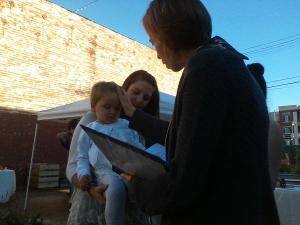
Practice Resurrection, Easter Sermon 3/29/2016

12931028_1774884932744207_2854553264218616436_n

Easter Sunday 2016
Rev. Anna Woofenden
The Garden Church
Readings: John 20:1-18, Luke 24:1-12

Audio

Manifesto: The Mad Farmer Liberation Front

By Wendell Berry, (excerpts)

Love the quick profit, the annual raise,
vacation with pay. Want more
of everything ready-made. Be afraid
to know your neighbors and to die.
And you will have a window in your head.
Not even your future will be a mystery
any more. Your mind will be punched in a card
and shut away in a little drawer.
When they want you to buy something
they will call you. When they want you
to die for profit they will let you know.

So, friends, every day do something
that won’t compute. Love the Lord.
Love the world. Work for nothing.
Take all that you have and be poor.
Love someone who does not deserve it.

Give your approval to all you cannot
understand. Praise ignorance, for what man
has not encountered he has not destroyed.

Ask the questions that have no answers.
Invest in the millennium. Plant sequoias.
Say that your main crop is the forest
that you did not plant,
that you will not live to harvest.
Say that the leaves are harvested
when they have rotted into the mold.
Call that profit. Prophesy such returns.

Put your faith in the two inches of humus
that will build under the trees
every thousand years.
Listen to carrion – put your ear
close, and hear the faint chattering
of the songs that are to come.
Expect the end of the world. Laugh.
Laughter is immeasurable. Be joyful
though you have considered all the facts.

Go with your love to the fields.
Lie down in the shade. Rest your head
in her lap. Swear allegiance
to what is nighest your thoughts.
As soon as the generals and the politicos
can predict the motions of your mind,
lose it. Leave it as a sign
to mark the false trail, the way
you didn’t go. Be like the fox
who makes more tracks than necessary,
some in the wrong direction.
Practice resurrection.

Christ is risen, he has risen indeed!

Practice resurrection. Practice resurrection. These words from author, activist, and farmer Wendell Berry woke me up the other morning. They woke me up as I’ve been pondering and turning over and over in my mind, what to preach on Easter Sunday? Easter Sunday, this glorious celebration, this Sunday of all Sundays, this pinnacle of the Christian church calendar, the conclusion of the rich experiences of Holy Week. What is there to say on a morning like this? When signs of new life and joy and beauty and hope surround us, when it’s easy to see and believe in new life and re-birth and hope for new beginnings.

We say, “Christ has risen, he has risen indeed!” Our voices ring out, and maybe that’s the only message we need. In one way yes, it is the only message. But I long for a little more, or more texture and nuance to this proclamation. I long not for an isolated snapshot, just a moment of happiness in time, as genuine as it may be, and as essential as it is to notice and appreciate these moments. I long for something more than just one morning a year to celebrate new life and to remember that that which is dead can be renewed. I long for something that’s awakened with these words, “practice, practice resurrection.”

Because a practice, rather than an isolated snapshot, is something that is lasting—it’s transformative. Engaging a practice permeates what we do and how we act; it changes our engagement with the world around us. A practice is something that lives within a bigger cycle, a larger narrative, a life that is alive and aware of love and possibility.
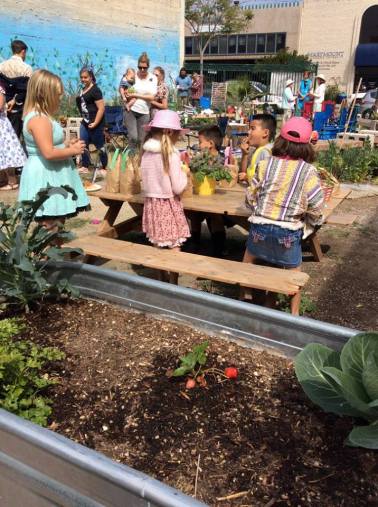
tgc2

I believe the same is true for these stories of Easter. They are more powerful when they are in the context of the larger narrative, when we take in the entire arch of the story. It’s tempting to think that Easter morning is the only story; it’s just all about the hope and new life of Christ rising. Yet, without the broader story, Easter is just a blip in on our calendar, a day of egg hunts and big hats (which are absolutely lovely!). But Easter within the context of the larger narrative, practicing resurrection in our lives, and engaging and noticing the way the Divine love is always working for good in the world, now that is one powerful story!

Because when we look at the arch of the stories leading up to and following Easter, we see hope, yes. But not hope tied up neatly in a fancy ribbon kind of way. No, in this larger story of Easter, we see a promise. A promise that God is always practicing resurrection and calling us to a life of the same. We see the promise as the seasons keep changing, we see the promise when that seed inside the husk pushes to burst forth into a plant, we see it when love comes after pain, and when that stone is removed from the tomb—the promise of resurrection, the promise that new beginnings are always possible.

The stories of Holy Week, the story of Jesus’ life, death, and resurrection come as a whole, not to be parsed out into single claims or divisive moral or theological codes. The story of Jesus tells us the way of love. We see this throughout Jesus’ life, from his birth in a lowly manger on the outskirts of town, to the way he reached out across boundaries, healed and taught and ate with all sorts of people. His ministry—his life—was not one of power and control or trying to impress or be in line with the forces of the day; his life was about service and compassion. About being in and amongst the messy, reality of people’s lives, being in human skin and encountering the reality of humanity.


Even to the end. Jesus was relentless in his loving, and the stories of this Holy Week show that so starkly. From the love he showed as he mourned over the state of Jerusalem and then rode into the city on a donkey, with the crowds of peasants and disciples calling out to him and laying down palm branches to prepare a way. To the devotion he showed on that last supper, that Passover meal that he shared with his closest friends and companions, where he took bread, broke it, and said “this is my body given to you, do this in remembrance of me…” And then later after the dinner, he took a basin of water, bent down, as a servant would have, and washed his disciples feet setting an example, calling us to love one another as he loved.

And then, when that very next day, being abandoned, abused, and ultimately crucified and left to die on the cross, in the deepest moments of abandonment and while subject to the depths of human violence he voices love as he calls out, “forgive them, they know not what they do.” And breathes his last. But with Divine love, the last, the death is never the final word.

In this larger story of love, love always is born anew, love persists through struggle, love overcomes pain, love is resurrected, transformed into life, and that is what we celebrate this morning. This whole story is the story of Divine Love embodied, showing us how to practice resurrection.

tgc3.jpg

Now practicing resurrection, following the story of love, doesn’t mean that we understand it all, or that we suddenly don’t worry or doubt or wonder. Practicing resurrection is not devoid of the hard parts, and doesn’t avoid the messy and vulnerable places. Just as we washed each other’s feet and hands on Thursday, and allowed ourselves to be present both to the vulnerability and the power of love, practicing resurrection means opening ourselves up to God’s constant movement of making all things new, whether we understand it or not.


I mean, the disciples certainly didn’t get it. At the tomb, they are perplexed, unbelieving, terrified. They just don’t get it. They look around in the tomb for Jesus’ body. They ask each other what had happened—they don’t see how the empty tomb is the promise of new life. Yet, even in their state of wonder, of disbelief, they actually encounter this promise of resurrection.

We don’t always get it. Maybe rarely do we notice where God is bringing new things out of the dead and dying places in our lives. We don’t pay attention to how something that a few months or years ago seemed like the end of all things, has actually given birth to something new. We, like the disciples, often only see what is right in front of us, the empty tomb. And it’s only in retrospect that we can turn and see where the new life has come. Whether we understand it or not, God keeps practicing resurrection.

New life is not something that comes independently of the death or the struggle, the rejection or the pain. New life comes as the stone is rolled away, after three days in the depths of the tomb. New life comes when that part of ourselves we constantly struggle with finally lets go and dies, allowing something new to grow. It requires time in the tomb. It requires that time when the seed is in the dark womb under the dirt, looking withered and dead, before the plant is born.

Just as these seeds I’m holding are withered and hardened, and then have to be placed in the ground. And just as they have to stay there a while in the dark, in the seclusion, before they break out and become plants that will then bear fruit and become food, so is our process of life, death, and resurrection. As God gently stirs those parts of us we think have died, the place in you that you fear will never be able to breathe again, where there is no hope.

God is practicing resurrection, as relationships are reconciled that we thought were lost, when families and communities are transformed into places of hope. God is practicing resurrection right here in the garden, certainly in our lives and in our community.

Take this space for example. A year ago, it was a barren lot, an empty space, an empty hole in the middle of the block. Save Dino of course.

tgc5

Now, we have all cultivated it together, practiced resurrection together, and here we are in a place that’s a little more like heaven here on earth. It’s a place where new life and possibility and hope are found as we’re honest with each other and share the struggles and the hard places, where we pray to have the stones removed from the tombs in our lives. Where we’re growing our own food and eating it together, resisting disconnection and division as we come together with all kinds of people, around this table to feed and be fed.

We come around this table today, each with our own stories. And we each have various expectations of what Easter is about and what we need on this day of new beginnings, of new life.

My word for you, and I believe God’s word for all of us on this day is not just the hope of hope, but it’s the promise of new life, not only in some far off time and ethereal place, but the promise—the practice—of resurrection right here and right now.

Yes, things die. Things crumble. Things fall apart. In our lives, and in the world around us. Parts of ourselves that are no longer serving us have to die. Plants die. Seeds fall. There is the darkness under the earth, the time in the tomb. Because this is part of the story.

But the story is always, always larger than that. In the overarching narrative is God’s constant promise: the promise of the cycles, of the seasons, the promise of new life, drawing new life forth from that which is broken, abandoned, abused, discarded. Taking that which is dead and raising it again, showing us that love always, always, is being reborn among us.

Spring comes after winter.

Old wounds are forgiven and new relationships forged.

Flowers grow out of the cracks in the sidewalks.

People change their minds and see the light in each other.

Things that end give life to new beginnings.

Dreams we never thought were actually possible, begin to blossom.

The sun comes up each morning.

We can choose the way of love each day.

Resurrection is happening everywhere, all around us, all the time.

God is always urging and pressing to be received, to renew, to reconcile, to bring new life.

The stone is rolled away.

And it’s our job to pay attention. To pay attention to where God is making all things new in the world, to see God alive and working outside of the tomb, and to respond, as Mary did, when we are called.

On that very first Easter morning, Mary stood outside the tomb weeping. Her Lord had died and been taken away. “Why are you weeping?” Jesus said. Supposing him to be the gardener, she told him of her grief. Jesus then said to her “Mary!” and when she heard her name called, she exclaimed “Rabboni, teacher” and she recognized him and went out proclaiming, “I have seen the Lord.”

Friends, the loving expansive God of the universe is always reaching out to us, calling our name. Notice that he was not in the tomb, but outside of the tomb, calling us out of the darkness, the places of hopelessness, showing us the promises of new life, calling us to engage in the practice of resurrection.

Because here’s the thing about this practice, here’s the thing about the way that God works, nature works: the stories of scripture remind us, you can’t tell just one part of the story—wherever you are here, today is not the end. If you are here today and you feel stuck or in bondage, if you have a dream that you barely dare to dream, if you’re here today basking in the beauty and joy, if today is a bright snapshot, all of this is part of your bigger story.

tgc4

The hope comes in the whole of the narrative, that your life story matters—it matters to God and it matters to the world. Your willingness to keep showing up, to keep getting up, to walk through the dark places, to reach out to others, your ability to engage joy and beauty, to cultivate goodness and peace, your story matters, as we show up and notice and engage the love and life, we are practicing resurrection.

So, friends, (in the words of Wendell Berry)

Every day do something that won’t compute.

Love the Lord.
Love the world.

Laugh.
Laughter is immeasurable.

Be joyful though you have considered all the facts.

Ask the questions that have no answers.
Invest in the millennium. Plant sequoias.
Put your faith in the two inches of humus that will build under the trees every thousand years.

Practice resurrection.

Amen.

We’ve all Got Feet–A sermon for Maundy Thursday

12718007_1773482939551073_1857888852367543408_n

Maundy Thursday 2016
Rev. Anna Woofenden
The Garden Church, San Pedro, CA

Listen to the Audio

In 2008 I came down with a debilitating illness, one that put me on disability for months, and for many weeks of that had me lying on my friends’ couch, only able to walk tentatively to the bathroom and back, the rest of the time only able to lie on the couch. I had always prided myself in being a self-sufficient person, living on my own, taking care of my home, traveling solo, unplugging clogged disposals and changing car tires, taking meals to those who needed them, and being the one who was always available to help others. I didn’t need help, I didn’t need other people, I could do it all myself.

Until… I couldn’t do any of it myself. I couldn’t do anything. I couldn’t cook for myself. Or do laundry. Or drive. I couldn’t work. Or be productive. Or useful. Or accomplish things. And all I could do was be there. And receive. And be taken care of. And receive the love and care from others.

I will never forget the Maundy Thursday service that year. Even in my weak state, I didn’t want to miss the service. So a friend picked me up and drove me to church. She helped me walk slowly inside, where I was able to direct the final decorating and setting up of this service that every other year I had been intimately involved in preparing for and leading, and giving to others. It was a joy to be around the table with these people I loved, and to participate in worship with them. I soaked up the candles and the taste of the lamb in my mouth, and preciousness of being together in community.

And then it came time for foot washing. We drew names out of a bowl, and one by one, people came and took the hand of another and brought them up to the front of the sanctuary and washed their feet. I sat there in the candlelight, waiting and wondering. And then, a familiar hand came towards me. It was the pastor, but not just our pastor; this was my colleague, and dear friend. The person who, along with his wife and family (who already had a house filled with small children at the time) had been taking care of me during the months of my illness.

This was the person who had been cooking food that I could eat, and making sure I ate it. This was also the person who had been without a co-worker for all these weeks and months, and had been doing both his job and mine at church. The person who, probably more than anyone else, had been affected by my illness, and by the fact that I was not able to be doing things for others, let alone take care of myself. This was the person who was reaching out to follow Jesus’ example, love one another as I have loved you, wash each other’s feet. And I was the person who was to receive it.

10152019_1773450689554298_796215167823181571_nWe gather around tables tonight, to celebrate Maundy Thursday, Maundy, the mandatum, the mandate, the command to love one another, picturing and creatively wondering what it would have been like to be with Jesus that last night before his crucifixion as they gathered in that upper room in Jerusalem to share the Passover meal together.

This Passover meal had been being celebrated over the decades and centuries, since the Children of Israel, held as slaves in Egypt had first celebrated this meal on the eve of their liberation. Remembering how on God’s command, they had marked the doorposts of their homes with the blood from a lamb, as a sign that the angel of death should pass over them. They had eaten the bitter herbs and baked the unleavened bread, all eaten in preparation, as they were ready to make their move to freedom the next day. And this feast, remembered and celebrated every year since, in the years as they wandered through the desert, through the decades, to the Passover meal Jesus celebrated with his disciples, through the centuries to this day. The Passover is celebrated, and the God of liberation, the God who calls us to free those in bondage and free each other, is always moving in the way of liberation for captives, and freedom from the things that hold each of us in bondage.

As we share in our Passover meal together, we’re invited to continue to reflect on these questions as we share this meal of invitation, of liberation, of freedom. As we eat the lamb, we’re reminded of the innocence that God places within each one of us, the innocence that believes that joy is possible, the innocence that despite all the painful and hard things we’ve experienced, can still reach out for freedom and hope. We share the bitter herbs, reminding us of the temptations, the struggles along the way. That there are struggles, and they are part of the meal as well. We share the bread, the bread of life, God’s love incarnate in the world, and we remember the Love that is present here and present in our world, available to all.

12670549_1773483089551058_6020044807004343430_nIt’s during this feast of Passover, as Jesus and his disciples celebrated it in Jerusalem that year, around that table in the upper room that what we now refer to as “the Last Supper” was celebrated. It was during that meal that Jesus took the bread and blessed it and broke it and said, “This is my body, which is given for you. Do this in remembrance of me.” And he did the same with the cup after supper, saying, ‘This cup that is poured out for you is the new covenant in my blood.”

And so, for the years and decades and centuries since, people have been gathering together around tables, throughout the world, in different languages and places and cultures, and doing this in remembrance of Jesus. In remembrance of these acts of love. Sometimes humans have gotten hung up on the who and the how and what of this sacred act. But the Spirit persists, and keeps calling us back to the table—God’s table—where all are welcome to feed and be fed. Expressing and experiencing the expansive love of God and the reciprocal love of other people.

And then, on that Last Supper Passover evening, Jesus takes the embodiment of love a step further, showing us how to love one another, as vulnerable as it can be. That last evening with his disciples, he took off his outer robe, and tied a towel around himself, poured water into a basin, and began to wash the disciples’ feet and to wipe them with the towel that was tied around him. After he had washed their feet, put on his robe, and returned to the table, he said to them, “Do you know what I have done to you? You call me Teacher and Lord—and you are right, for that is what I am. So if I, your Lord and Teacher, have washed your feet, you also ought to wash one another’s feet. For I have set you an example, that you also should do as I have done to you.”

5515_1773450799554287_3634859720897877678_nJesus gives us this command, to love one another, and then shows us an example of what that looks like. By humbling ourselves to each other, being willing to wash each other’s feet, yes, but maybe even more difficult for many of us, by being willing to have our feet washed by others.

Receiving the expansive love of God and the reciprocal love of others, means being vulnerable, admitting that we can’t do it all ourselves, to need each other, to care for each other. And that isn’t always easy, and it’s usually messy, and we may feel a little uncomfortable, vulnerable, shy. Because really seeing each other, following Christ’s example to love one another, it’s the real deal. It’s not something that can be kept clean and pristine, something we just talk about or think about. Following Jesus’ command to love one another means engaging with the messiness of life, helping others and letting them help us.

This vulnerability, this realness, is embedded in this very act of washing feet, because friends, Jesus washed His disciples’ feet because they were dirty. They hadn’t gone out to get their Maundy Thursday pedicures in preparation for this service. These men and women had been walking in the hot, dusty, Palestinian streets, wearing sandals; no doubt their feet were probably filthy, and dry, and in need of some attention. Jesus washed His disciples’ feet because they needed washing. And He told them, “as I have washed your feet, you also ought to wash one another’s feet, for I have set you an example…do as I have done to you.”

12524248_1773483266217707_8263322057590132625_nFriends we all have feet. We all have feet. And we all have the parts of our lives that have been walking through the dust. That are messy, that are dirty, and that we don’t want to share with anyone. And being willing to take off our shoes, even our socks, and say to another person, “Yup, I’ve got feet just like you, I’ve got parts of my life that aren’t as pristine and put together as I would like to be.” I’ve got parts of myself that I have to say, “I can’t do it all by myself.” I have to receive. “These are the feet that Jesus washed, these are the feet that we’re commanded to love and wash for each other.

Just as the disciples let their teacher, their guide, their friend, bend down and wash their feet, as he saw them for who they are—messy, vulnerable, hurting, beautiful, and beloved people. Not loved because of how they got it right, because certainly the disciples rarely did. Not because of following the rules perfectly; Jesus was often breaking the cultural norms himself. Not because of what they had accomplished, or how they looked, or any other thing that we believe makes us worthy to be loved. No, Jesus bent down and washed his disciple’s feet just because he loved them. As they were. Dirty toe nails and all. Whole and messy, vulnerable and beautiful, loved, loved, loved. And then Jesus tells us to love each other, and do likewise.

12799411_1773464592886241_5030245574190186351_nOn that Maundy Thursday in 2008, I felt this love. As my friend and colleague came and took my hand and asked, “May I wash your feet?” and then bent down and carefully poured the warm water over my weak feet and dried them with a towel.

In a place of deep vulnerability, where I could not do it all myself or be “just be fine on my own,” I was shown love. Shown the love that is always available from God, no matter whether we feel we deserve it or not, and shown the love that the Lord invites us to show each other.

The love that we have we have an opportunity to share with each other, to be in community together, as we follow this command of Christ, love one another as I have loved you. Go now and do likewise…

Amen.

Ritual of Protest–A Palm Sunday Sermon


10294472_1770222679877099_6138238975058536742_nMarch 20th 2016, Palm Sunday
The Garden Church, San Pedro, CA
Rev. Anna Woofenden

Link to Audio

Today is Palm Sunday, the day where we engage the story of Jesus riding on a donkey, followed by his ragamuffin crew, riding into Jerusalem while a bunch of peasants welcomed them by waving palm branches and shouting praise. As Jesus enters the city, a “whole multitude of the disciples” throng around, and spread their cloaks on the road, wave palm branches and lift loud their praise, ”blessed is the king who comes in the name of the Lord peace in heaven and glory in the highest heaven.” And “Hosanna!” “God save us!”

Zoom out for a moment to see the context of this story…. Passover week was a big deal in Jerusalem—Jews from all over gathered to share in this feast day, this feast of liberation together. Likely there were two processions that day. From the west came Pilate draped in the gaudy glory of imperial power—horses, chariots, and gleaming armor. He moved in with the Roman army at the beginning of Passover week to make sure nothing got out of hand. Insurrection was in the air as Passover was being celebrated, and the memory of God’s deliverance of the Hebrew people from slavery in Egypt was in people’s minds.

Then from the east came another procession, a commoner’s procession—Jesus in an ordinary robe riding on a young donkey. The careful preparations suggest that Jesus had planned a highly ritualized symbolic prophetic act. Showing in this act the coming of a new kind of king, a king of peace who dismantles the weaponry of war, the leader who shows power through reaching out and touching those who are untouchable, and healing and calling for justice and love. Jesus comes around a bend in the road and sees the whole city spread out before him. It makes him weep and we hear him say, “Jerusalem, Jerusalem… If only today you knew the things that make for peace…” Calling for peace, peace for all people, for the earth, for all living beings.

735074_1770222439877123_7738148248014871312_nLuke’s Palm Sunday account echoes his Christmas story. When Jesus was born, the Gospel writer tells us that angels appeared to sing, “Peace on earth.” Now as Jesus rides his colt towards Jerusalem, the people look to the sky and sing, “Peace in heaven.” Peace on earth, peace in heaven, the cry echoing back and forth, echoing, reverberating to this day. Peace on earth, peace in heaven, peace on earth, peace in heaven….

Think back just a bit, to Christmas, to that story and promise of peace on earth, good will to all people. I’m remembering the darkness, physical darkness here in this space, and the darkness that I felt in the world around us, in my own journey, that deep longing for peace, for good will towards all people. Moving forward on our journey together, we have had these weeks of Lent… this season of repentance where we’ve been asking the question: What separates us from the immediate love of God and the reciprocal love with other people? As we look at what separates us, we’ve talked about the process of repentance, of changing our minds, of turning and doing and living life more open to love.

On this Palm Sunday, we have the opportunity to engage in some tangible reminders, ritual as we process into Palm Sunday, moving into Holy Week with our palm branches held high and the cries of “Hosanna! God save us!” echoing in our ears. As we call out “Hosanna! God save us!”, we claim the truth that we will not be saved by a particular political figure, or the one more thing we need, or if our spouse would just do this, or if we got a new boss, or if we lost some weight, or if we accomplish one more thing. It’s not a better insurance policy that saves us, or having the right home or car.

It’s God who saves us. God who saves us from our self-doubt, saves us from our over-inflated egos, saves us from brushing by and ignoring another human being, and from diminishing our own possibility for being loved in the world. While I certainly believe things need to change and be attended to in the world around us, ultimately, happiness, contentment, peace on earth and good will to all people, must be felt and experienced inside each one of us—God with us. And from that place, we can be vessels of peace and love in the world.

1474547_1770222449877122_5848041661451775731_nAnd so on this day of celebration, but also on this day of statement, of claim, Jesus is showing us another way of how love comes into the world, how love drives out all fear, how the way of peace overcomes the way of power, how reaching out across the boundaries and seeing the light in other people is always.

The entrance on Palm Sunday was a protest. It was a statement that the ways of the Roman Empire were not the way of peace. The procession on Palm Sunday was both protest of what was happening around them and example of the way forward, “Hosanna! God save us!” It was appealing to the Divine Love, Jesus entering into the city and going to the heart of where the people were, and even in their response shows us the way. As Jesus rode into the city, they took off their outer garments and laid them down, they took palm branches and waved them, they engaged in this ritual of protest, this proclamation of there being another way.

We gather together here at the Garden Church, we make church together, we grow our own food and welcome all to the table each week because we’re moved by the same call—engaging in a ritual of protest against the forces of consumerism and fear, isolation and division, apathy and hate. As we commit each week to cultivating our plot of earth, our place of more peace and justice, love and reconciliation, in the middle of our city, we’re engaging in a ritual of protest, a protest for the way of love and removing—repenting—of the things that keep us from actively engaging that love.

And so as we move into our own procession, our protest around the garden, we’re invited to think about this question we’ve been working with… “What separates you from the immediate love of God and the reciprocal love of other people?” What do I need to let go of, change, and engage to walk forward in the way of love?

We’re going to go on this journey together around the garden, in our own act of ritual protest, of sacred movement. We’ll stop at three stations around the space and have a time of ritual and prayer at each one of them—we’ll raise our palm branches and ribbons, lay down garments, compost old ideas, tie ribbons of new hope, and give it all over to the One who saves us.156222_1770222456543788_8081206631244357152_n

90 for 90 | In honor of Grandma Gladish’s 90th Birthday


1520607_10152098265146866_1764685724_n

  1. There was a beaver dam near the Beaver Island house, we walked up there as many times as it took to get a glimpse of this creature who’s teeth made such interesting marks on the wood chips scattered by the felled saplings.
  2. Grandma came out when most of the babies were born. She understood the important role of the big sister and would help me as I helped to hold and diaper and care for the newest addition.
    WoofFamilyScanned0197
  3. Years of family dinner, rotating around, at Grandma’s house you could always count on a cake for dessert. Applesauce walnut and the various fruit upside-down cakes were favorites. WoofFamilyScanned0659
  4. The winter Grandma and Grandpa lived in the little yellow cabin down the road from us and Grandma gave me homeschool lessons once a week or so. I don’t remember the lessons, but I remember how she made hot lemonade with honey when we both had colds.
  5. Making sand cakes on the shores of Lake Michigan, complete with sumac berry decorations and tiny twig candles.
  6. Growing up surrounded by Libertarians, Grandma gently showed me that it was okay to be a liberal democrat and to have a different view on things.
  7. The Atlantic magazine was often on the coffee table and NPR playing. As a young adult I was delighted to find that Grandma was always up on current events and had something wise and interesting to say in response to them, offering me a unique perspective on whatever was going on in the world.
  8. When Grandma was in the hospital last spring, after a stroke and heart attack, we wondered if that was the end.
  9. When she went back into hospital a few weeks later, I got on a plane. I’m so grateful for that week spent together.
  10. The time in the ICU was particularly precious, as I sat by her bedside and she napped, then would wake up and tell stories and keep telling us how much her family means to her. 11222707_10153008282079094_5756466038578411108_n
  11. Her time in rehab was difficult, for her primarily of course, and for all of those of us who love her. I felt a zeal for assuring she got the best care possible, while working through my own feelings of fear and annoyance and love.
  12. Every phone call with Grandma is a sweet gift these days.
  13. When we get on the phone, before I can even tell her about something that’s going on, she’ll ask about it. Because she’s already seen the post on Facebook and remembers to ask more.
  14. Grandma knows how to actively and appropriately engage social media better than most people half her age and even though her hands can’t type much anymore, she stays up to date with all of us.
  15. Mom told me recently that Grandma said, “I’m wishing and praying for a man to come along for Anna who just loves her and nurtures her and can be a real partner with her in her big life.”
  16. Grandma’s knowledge and wisdom of faith and life have been a consistent foundation.
  17. When I came to visit while I was in undergrad and later on seminary and in general, I could always count on a good theological conversation buddy and she would connect things and open my eyes in new ways.1932197_10152025516544094_709070871_n
  18. When it became clear that it was time for me to resign from the General Church, I called Grandma a bit teary, worried that she was going to be sad and disappointed. Instead I heard on the other end of the phone, “Of course you do, that’s alright dear, the Lord’s church is so much bigger than any one organization.”
  19. She went on to tell me how all four of my grandparents, as well as my great grandparents would be so proud of me and delighted that I’m committed to continuing and working for the new iteration of this tradition that they had dedicated their lives to.
  20. When Grandpa died suddenly in 1996 I remember wondering at Grandma’s seeming calm. I have seen that calm last over the last 20 years, not because she didn’t grieve, but because of her active deep knowing of their ongoing spiritual connection and plans to be together for eternity.
  21. In the kitchen of all of Grandma and Grandpa’s winter homes on Guemes, there was always the set of poetry magnets for the fridge. It appeared to be an ongoing silent play between them, moving and shifting words to make witty bizarre statements, clever observations, and pithy poetry.
  22. Once, when I was about eight years old and Grandma was visiting, my parents were deep in an argument. Grandma took me on a walk and as we were walking she said, “Anna, it’s not your fault that they’re fighting.” I didn’t quite believe her at the time, but I never forgot her powerful words.
  23. After we outgrew the beautifully crafted dolls, knit penguins and corduroy bears, you could always count on Grandma for a gift that helped the world. Heifer project goats or a piece of an Amazon rainforest saved, expanding our ideas of what it means to give and receive in the world.
  24. Grandma has always been a painter, or since well before I knew her. Her nature watercolors bring alive the shell, the ocean, the single flower, the burst of life.
  25. Classical music. Often playing.
  26. Gardens, she always had a garden. From the big vegetable garden on Beaver Island, to the pots on the front porch wherever she’s lived. Growing things surround her. 11263924_10153105277928823_5538681355577963317_n
  27. For years Grandma had regular tea with a few other women of a similar age on the island. Because community is important.
  28. A staunch feminist, she taught me to value all people, including myself.
  29. On a long conversation as I was walking along the cliffs recently we mutually shared our questions and wonderings about who to vote for in the primary elections coming up.
  30. When I was a teen I don’t think I really appreciated Grandma. I’m grateful she stuck it out and kept loving me until I could again.
  31. Grandma’s delight in my ministry keeps me going.
  32. I don’t have to explain why we are re-imagining church to Grandma; she gets it and has been in this mindset for years.
  33. When we have tea, there are always beautiful china teacups available.
  34. Grandma has spent hours and months, days and years getting all the family photos scanned and organizing and writing notes to pass the history on to the family.
  35. Grandma tells stories about going to elementary school in the basement of the Bryn Athyn Cathedral when the school building had burnt down and exploring around the stone pillars and stained glass.
  36. She tells how she was in college during WWII and with all the young men off to the war; there was a powerhouse team of brilliant woman who were given space to shine. This cohort is powerful and strong to this day, even as they send each other off to the afterlife one-by-one. 1554394_10152098268301866_854643722_n
  37. Paint brushes.
  38. Earl Gray tea bags.
  39. Spider plants.
  40. I always loved that my two sets of grandparents knew and appreciated each other.
  41. Grandma often confidently gives affirmation on behalf of the three grandparents who have died, as well as herself. “We’re all proud of you.”
  42. Until recently, Grandma was competently driving her old red car wherever she needed to go.1525131_10152098267026866_849819718_n
  43. I found out when she went into the hospital that she was totally organized, all her paper in place and even passwords and such written down in one place.
  44. Watching Grandma surrender to being in charge of it all and lean on her children and grandchildren and professionals was powerful, painful, beautiful and profound.
  45. On our big Opening Planting Day at the Garden Church, my sister Rose set it up so I could Facetime with Grandma from the ICU and she could see a bit of the celebration.
  46. She always has a good read on all of us, her children and grandchildren, and knows what’s going on in each of our lives.
  47. When she was a little grumpy at me at the end of a long hard day after moving into the rehab facility, she realized what she had done and lovingly apologized in the morning.
  48. Columbines on the front porch.
  49. She’s said for a while now that she’s ready to die when it’s time, but it seems God wants her to stick around a bit longer.
  50. Last spring I prepared myself to be ready to let go, for her sake, if it was time for her to go, but I’m so glad for each day she’s still with us and I cherish the connections.
  51. I secretly hope she’ll live long enough to meet the man I’m going to spend my life with. But if not she’s committed that one of her first tasks as an angel will be to nudge along that process.
  52. When we all gathered around her last summer it felt so right. Honoring this woman who has given so much.11753287_10153105278363823_7253375031402606448_n
  53. It’s strange not to be all together for her 90th birthday, but it’s also a reminder of how we all want to love her and appreciate her everyday.
  54. When I was 8 or so Grandma was visiting and somehow the idea of an Autograph Album came up. Oh, it was straight out of Laura Ingles Wilder I do believe. Grandma totally got into it with me and we made a special Autograph Album which I proceeded to carry with me for a number of years after that, getting autographs from baseball players, famous ballet dancers, family, friends, musicians and even a special drawing autograph from the children’s author Peter Spier’s.
  55. Grandma wrote: “December 1990 I like talking with you and finding out what is going on in your life. You are very dear and special! Lots of love, Grandma G.”
  56. Grandma saw me, and sees me.
  57. Grandma saw each of us grandchildren as individuals with our own lives and interests and stories.11709456_10153102994559094_5788501064396681270_n
  58. For years she and Grandpa, and then after Grandpa died with other helpers, she worked on editing the New Century Edition of the theological writings of Emanuel Swedenborg.
  59. She was one of the most well read Swedenborgians I know, a lifetime of study and devotion.
  60. Grandma never seemed afraid of the future and progress, always putting it in the context of history with a hopeful look to the future.
  61. Knit sweaters gave way to fleece pullovers.
  62. Watching the frustration and patience as she has become less able to use her hands and feet in recent years.
  63. Always inquisitive.
  64. Continually learning.
  65. Always.
  66. Committed to her religious tradition, while living and moving and being expansively outside it for much of her life.
  67. People still tell me how she was one of their favorite elementary school teachers.
  68. Years and years of scrabble.
  69. We can talk for hours.
  70. When we visited on Beaver Island when I was six and Louis was two there was a giant torrential rainstorm, novel for us Pacific North West kids who were used to constant drizzle. We were freed to go run outside, dig streams in the driveway and get completely and joyfully soaked.
  71. Wherever she lived, even when it was just winters on Guemes Island, Grandma always made it home.
  72. She always had cool photo calendars.
  73. The Coo-coo Clock! We can’t forget the Coo-coo clock!
  74. She was/is very careful with money and somehow makes it last.
  75. When I was in my second year at Bryn Athyn College she visited and it was amazing to see the town through her eyes.
  76. She showed me the house she grew up in, with one set of grandparents next door and the other behind and kitty-corner.
  77. She described the building that was now student housing where I was living as the stable and carriage house for the large estate that was still active when she was a child.
  78. We went to lunch with her old friend Miss Mary Lou and I realized Grandma had been young too once.WoofFamilyScanned0760
  79. When I talked to her this morning for her birthday, she said, “It wasn’t my aspiration to be 90, but here we are.”
  80. We talked about all sorts of things, including tips on the lemon meringue pie I plan to make this afternoon. “I don’t know that I’ve ever made one, but I know they talk about how it’s important to spread the meringue all the way to the edge” she helpfully shared.
  81. I shared the real things going on in my life and she was as present and interested and hopeful and engaged as I am.
  82. She gave me her regular reminder that I “can’t do everything, for everyone, all the time” and reiterated her Lenten challenge for me, “to rest.”
  83. When I asked her what she’s learned in her 90 years she said, “I’m still learning. I’ve learned a lot of stuff, but I’m looking forward to learning more.”
  84. She went on to share her wisdom about how life has seasons or stages, “not always exactly what you want them to be, but they are there for good reasons.”
  85. She then gave her wisdom on life: “Learn patience, and not to try to do the whole world yourself, and try not to hurt people.
  86. Give expressions of love and tell people how grateful you are for them.
  87. And step back, it’s all in the Lord’s hands.”
  88. Grandma, we are the luckiest to have you in our lives. Thank you for all 90 of your years and being a role model, an inspiration, a constant support, a cheerleader, a wise sage, a friend and my grandma.
  89. I love you.
  90. Happy 90th Birthday!
    11737854_10153102994084094_8556770452320035554_n

Baptized and Beloved Sermon 2.22.16

Picture0221162158_1Baptized and Beloved
Rev. Anna Woofenden
The Garden Church
Scripture: Genesis 1:1-8, Matthew 3:13-17
Audio: 

I shared with you last week some of the stories about taking the ashes of Ash Wednesday out into the streets and into our neighborhood, and some of the interactions that we had with our neighbors. How this ritual of the ashes reminds us of our connection with all of humanity, with the earth, with each other and with God our creator, as we take the ashes and say over and over again, from dust you have come and to dust you will return. Divisions were dissolved as I bent down to touch the forehead of the old man slumped on the sidewalk, or lifted the foils on the woman in the hair salon, or smoothed the curls of the little boy at the gate, and taking my thumb, dipping it in the ashes and placing it on their forehead, said, from dust you have come and to dust you will return.

As the ashes—the dust—pressed into the skin of the humanity around us, as I traced that sign of the cross, it dissolved the barriers between us, looking into the eyes of another human being and remembering our shared humanity. It a reminder of how we are all interconnected with each other, with the earth, created out of the expansive love and creativity of our shared Creator, who formed humanity out of the dust, shared even as the God of the universe, when incarnate, come and mixed with the ash and the dust of human flesh, came and walked among us as the Christ, the anointed one.

Baptized by water, reaching out and touching and healing, gathering people around the table, welcoming little children, blessing bread and wine, and inviting us to take and eat, remembering God’s love for us, remembering how we belong to God and to each other. Remembering how this child, prepared to be baptized here today, belongs to God, and we belong to her.

As the prophet Kahlil Gibran writes:

“Your children are not your children.
They are the sons and daughters of Life’s longing for itself.
They come through you but not from you,
And though they are with you yet they belong not to you.”

Today Leia is getting baptized, and in her baptism we remember how she belongs to God, to life greater than us, how out of the Love of God she was created and to the love of God she will return, baptized to name and claim this belovedness.

This baptism is for Leia, and for her parents, Sarah and Ed, and for their family. But this baptism is also for all of us, as a church belonging to each other.

While baptism is an invitation into something so much larger than any one community, as it connects us with the church universal, the communion of saints, all people who are loving God and serving neighbor in a myriad of ways, baptism, also connects us and binds us to the people right here with us. There is a beauty in the expansiveness of the church universal, and there is power in the particularities, of the specifics. This child, this family, this community, this church naming and claiming God’s love and promise, here, today. Naming how this child belongs to God, and how we belong to each other.

Baptism is a sign of that belonging.

Signs of belonging are tricky, because it’s so easy to see and point to how signs of belonging can quickly be used to say how people don’t belong. We need to watch that and be aware of that tendency in ourselves as human beings.

Yet, this is not a reason not to engage this sacrament, in fact, I believe it’s all the more the reason to deeply engage the particularities of a path of faith, and to choose to live and embody our faith in the world in a way that claims this belonging, as a commitment to being people who value all of humanity, living lives that enact the compassion and justice and reconciliation and hope that comes when we remember how we belong to God and to each other.

When we talk about belonging here at the Garden Church, I often compare the images of the fence or the magnet. So often the way that we belong to things is by having to cross over a fence—to believe the same thing, to look the same way, to follow certain rules, in order to be accepted.

But here at the Garden Church, and in a growing number of gathering communities, we’re working to engage a different model. A reimagined model. One of a magnet rather than a fence. And the magnet is the table—God’s table where all are welcomed, to feed and be fed. We belong here, however we choose to engage, because we’re drawn to it, and in being drawn together, we encounter each other. However we engage, as we put our hands in the dirt, as we pray, as we serve together, as we welcome the next face through our gates, we all belong because we choose to move towards love, and in love, belong to each other, and to our creator.

So this act of baptism today, this choice to engage this sign of belonging, is a choice to belong to a community centered around a magnet, not one that is a sign of making it over a fence.

It’s the choice to name and claim what is true and available for all of us, regardless of our path. That the loving God of the Universe, the Source of all things, created us and claims us as beloved, and that we, choose to live and see and claim that belovedness, that care for each other as human family, with each other.

When Jesus was baptized in the river by his cousin John, it was an unexpected choice, not going to the religious leaders, in the temples, behind the fences and strict codes to ask for ritual purification through proper channels. No, he went to the edge of the Jordan river, the local basic water source, where all the people were, and asked his cousin John, the roving prophet dressed in camel hair, who was living on a diet of wild honey, this roving prophet who’d been calling for repentance, for a change of minds, preparing the way for the anointed one, the Messiah to come. And then, there’s Jesus, going to John, right in the middle of the hustle and bustle of it all, amongst the people who were on the outskirts—curious, wondering, seeking—and asks to be baptized.

And when we was baptized, by a humble and reluctant John, the heavens opened, the Spirit descended like a dove, and a voice from heaven said, This is my beloved, with whom I am well pleased.

This is my beloved, with whom I am well pleased.

This is the message of the God of all things. This is the promise to each of us. This is the promise that we claim in baptism today.

God loves you. God loves us. God created us and created us beloved. And because of this, God is always drawing us closer, cleansing us, changing us, freeing us, creating us anew, drawing us around this table and reminding us that each and every day is a new day, and we are beloved and we belong to each other.

Amen.

My Time with The Garden Church – by Jessika Perez

This blogpost originally appeared at Common Cause Communities Hatchery LA site on 1/5/2016 and was written by Jessika Perez.

On Sunday, my family and I visited The Garden Church in San Pedro, California. Last May, they began transforming a vacant lot into a pop up, organic urban garden. Last semester, I had the opportunity to hear a little bit from Rev. Anna Woofenden about their vision and the journey the congregation has been on together when she came to share at the Hatchery. I was excited to connect with a local group that has recently launched and is passionate about re-imagining church. For them, this means viewing worship and service, church and community, physical and spiritual as interconnected rather than as opposites or separated from each other.

One of the things that was incredibly meaningful for me was that all (including my energetic 3 year old girls) were asked to participate. Allowing little ones to be part of watering and planting seeds is relatively low risk, as long as they’re supervised. My girls took their assigned tasks VERY seriously and absolutely loved it. However, allowing/asking them to be part of a service has slightly higher stakes. Not only were the people present incredibly open and warm, Rev. Anna also encouraged my girls to contribute during the service as they were able. They played (I use that term generously) instruments, helped to pass things out and were asked questions. Not to give the impression that we were transported to some eerily, perfect universe… there was definitely also a toy corner to help occupy the girls when needed. Part of their Sunday service is also sharing a meal. Their Sunday service intentionally includes work, worship and eating together.

What I loved about our time at the Garden Church was that fancy, super nerdy Christian words like the “incarnation” and “embodied spirituality” are not just talked about on their website and in the sermon. It’s practiced. That sounds cheesy, but when it’s actually experienced, it’s sort of disorienting (in an incredible way). When I first met Rev. Anna, she talked about all being welcome and encouraged to share their gifts. The first time we visited the Garden Church, my girls were included not just in the convenient parts like planting and watering, but in the entire service. It was a tiny and yet huge thing, sort of like a flower pushing stubbornly through a crack in the sidewalk. I’m so thankful for the time my family and I spent with them and for what I’ve been able to learn and experience already.

Beloved Sermon from 1/24/2016

IMG_3907


Sermon
1.24.16
The Garden Church
Rev. Anna Woofenden
Psalm 19
Luke 4:14-21

Link to Audio

When I was 11 years old I spent a week, seven whole days, away from home at Camp Firwood. Camp Firwood was one of those church camps in the area, for elementary and middle school campers, complete with packed schedules of boating and ropes course and bonfires, and cabin bonding and drama, and worship and a whole lot of pressure from staff to “get saved.” On one of the last afternoons of camp, my cabin counselor sat me down on the big front lawn overlooking the lake, and with her bible open on the blanket and her gentle, but insistent voice giving me the words, I shyly prayed that “sinner’s prayer” as she gave me the words, line-by-line.

Everyone back in my cabin was teary and excited when we gathered for nighttime cabin meeting that night. I’d been saved. Wasn’t that wonderful? I guessed it must be, though some part of me wondered if repeating those words had really changed me so profoundly or could really have such a drastic impact on my life and even on my eternal life? But they all seemed so into it, so I went with it and accepted the affirmation and then quietly wondered and pondered it all in my own head and heart.

And then I went home. And no one got it. I tried telling my mom, and I think she tried to listen and be supportive, but this was not within her religious comfort or sensibilities. I tried telling some close friends, but it didn’t connect. And so I quietly retreated, kept reading my Bible that I’d been reading since my parents had given it to me a few years prior, and wondered if anything had changed. It had seemed to mean so much to that camp community, in that religious context, but back in my normal life, back in my hometown, it didn’t seem to have changed anything.

In our gospel today, Jesus returns to his hometown after an intense and transformative set of experiences. As a young adult, he’s just been baptized by John in the Jordan River, and heard the words from above saying, “This is my beloved son, with whom I am well pleased.” And then, directly after the baptism, he spent 40 days in the desert wrestling with himself, the devil, and what he is supposed to do and believe and who he is. And now, after all that, he comes back to his hometown, back to where he is from, and claims and proclaims who he is and what he’s called to do.

The first thing I notice about this story is that he went to the temple, as was his custom. This was part of his regular ritual. Scholars tell us it was pretty normal for men in the Jewish temple system to read, and even request a specific text. It’s likely this was not the first time he read, as he picked these powerful words from the book of Isaiah: The Spirit of the Lord is upon me, because he has anointed me to bring good news to the poor. He has sent me to proclaim release to the captives and recovery of sight to the blind, to let the oppressed go free, to proclaim the year of the Lord’s favor.”

It’s after the reading that things get dicey. When he said: “Now the scriptures have been fulfilled in your hearing.” It’s at this moment in time that Jesus tells his hometown, these people he’s grown up with and have known him for years—“here’s who I am.” I’m Joseph and Mary’s son, yes, I’m that kid next door, but something else is going on here too. I’m claiming these words to describe what I’m called to do, defining my identity, proclaiming the work to be done in the world, of releasing captives, recovering sight, bringing good news to the poor, bringing freedom to the oppressed. Jesus saying: “this is what I’m here to do, this is who I am.” The people of his hometown knew the prophecies of the Messiah, the anointed one that they were waiting for. And here’s Jesus saying, “This scripture has been fulfilled in your hearing,” “I am the one who is here to do these things.”

Who did Jesus think he was? Wasn’t he just the carpenter’s son? Jesus stands up and takes this text from an abstract concept in scripture, something that generations had been waiting for and longing for, to the embodiment of it, “the scripture today is fulfilled….” “I’m going to do this…this is who I am.”

And this is where the people start to get ruffled. “Isn’t this Joseph’s son?” they ask? And then when Jesus goes on to give some stark examples of who God has used unexpected prophets in the past and who God’s favor often rests on (foreigners, the marginalized, the unexpected) the people begin to get more upset, and the texts tells us that the people in Jesus’ hometown are “filled with rage” and “led him to the brow of the hill…so that they might hurl him off the cliff.”

So, we might ask, “Why?” Maybe the friction comes in who we look to for our self-definition, who gets to tell us who we are and what our work is in the world. Where do we draw our worth, our sense of self, our understanding of our purpose for existence and being in the world? From the people’s opinions around us? Or from some Love greater than ourselves?

I had the honor of baptizing a little baby girl yesterday morning, and as I said the words of preparation, I thought about this text. I shared the reminder with her parents that these early years are formative and that the way that they speak to her, treat her, and model love in the home, will have a lasting imprint on who she believes she is and how she interacts with others, with the world, with God. The sacrament of baptism is this profound reminder of who we are, created and beloved by a loving God. And that this belovedness, this knowing of who we are and our worth is at the core of our creation, foundational in the weaving of the universe, true now, true tomorrow, true forever, no matter what. We are loveable and loved and God’s own, no matter what the people around us think or say or try to convince us of otherwise.

To know who we are, and to live authentically, to claim that, to proclaim prophetic words before your own relatives in your hometown requires courage. Maybe it’s to choose a different political party than your parents and be able to have a conversation with them about it. Perhaps it was the day when you told your family you were gay, or when you first shared with your conservative friends that you’re going to be a minister—as a female. Maybe it’s that moment at the holiday dinner table where you take an active stand against racism in your predominantly white hometown, or when you voice an opinion that is not held by the rest of your family. These are acts that require courage.

The courage to know who we are, and keep choosing that, keep speaking and acting authentically, even when the reception isn’t friendly, or when we feel like we’re going to be pushed of a cliff.

Sometimes these voices and pressures are outside us, the hometown voices questioning who we are and how we’re living our lives. And then, so often, these voices and pressures are within us. The difference between our ideal self in our own eyes and our actual self that we experience day in and day out, wreaks havoc on our lives as we strive to be better, thinner, neater, more patient, more accepting, more loving, more loveable, and as hard as we work at it and try, we struggle to bridge between the idea of who we want to be and who we are. We wonder how we can be come “acceptable” to ourselves, to others, to God.

The quote from the Psalms today, is one that I’ve quoted over the years, but it hit me a little differently this week. Let the words of my mouth and the meditations of my heart be acceptable in your sight, O Lord, my rock and my redeemer. (Psalm 19:14)

That word “acceptable” I’ve spent so much of my life trying to figure out how to be “acceptable in God’s sight” and approved of by others. From that sunny summer day at Camp Firwood where I said the “right words” to be now be “accepted by God” to the endless years of working on my spiritual growth, trying to be spiritually good enough, to piles of moral opinions that if I followed properly, could lead me to love and acceptance, that I’d be okay.

But here’s the thing, dear ones. Here’s the thing. Yes, words and intentions have power, yes there is good in working on our spiritual lives, yes the actions we take and values we espouse have an effect on our lives and the lives of those around us.

But none of these have any power over this simple fact. You are beloved by God. The God who created the heavens and the earth, the God who’s creative love emanates through and animates the universe, the God who has loved you before you were born, and will love you endlessly in her warm embrace, this love, this is where our truest identity is held, in God’s expansive and immediate love.

And I know that this is not necessarily the message we’ve always gotten, from church, from parents and community, from the world around us. There are so many voices to quiet—the ones telling us we need to work harder, be better, believe a certain way, act a certain way, and then we’ll earn God’s love. Then we’ll be acceptable in God’s sight. I know many of us have had voices of religion and people speaking on behalf of religion, using the God stamp, with words that condemn and separate, and systems of belief and salvation that set us up in ways that we feel we can never measure up to this love. And I’m sorry, I’m so sorry that we live in a world where fear and scarcity and condemnation so easily co-opts and corrupts our experiences.

I can’t change that in the past for any of us, but I, and we, can continue to name and claim the transformative, formative, deep knowing that I long for and believe to be true.

God loves us. The source of Life and Wisdom and Love, the Higher Power, the Spirit that moves in all things, the God of the heavens and the earth, loves us for who we are. We are acceptable in God’s sight as our birthright, as beloved humanity, as creations of God. Not because of what we do, but because of who we are. And if this becomes our touchstone, the ultimate reality that we continue to be drawn back to, that we reach for as we stumble (because we will) that we are reminded of over and over, as we start to compare ourselves to others or go into a shame spiral about how we messed up again.

If this is the ultimate reality, if our ultimate self-definition is as beloved by God, then we may start walking back into our hometowns differently. Feeling a bit of the sting when someone we used to be close to can no longer connect because of who we have become, but not letting it take down our knowing of who we are.

If this is the ultimate reality, all humans being beloved by God, then we may find ourselves proclaiming things that we never imagined, like freedom and release for the parts of ourselves that have been held captive by old belief systems, and having our eyes opened to see ourselves and the world around us in new ways.

If this love of God is the ultimate reality, then we gather together in community, not to download the book of rules of how we can climb the ladder to God’s love and acceptance; we gather to remind each other, and to remember together, as we say in our words of confession and assurance each week, that we come together in the presence of a God who is slow to anger, and abounding in steadfast love. God who loves us, each one of us, all of you, loves us as we are. Amen.

Celebrate Together!

tgc

Over the last year the Garden Church has…
·Launched in our public space and transformed an empty lot into a vibrant
urban garden and gathering space.
·Welcomed over 6,000 people through our gates.
·Grown and distributed pounds and pounds of fresh produce.
·Met weekly for worship as we work together, worship together, and eat together, re-imagining church.
·Collected a half-ton of compostable materials from vendors and the local
community, kept out of landfills and turned into soil.
·Partnered with numerous local faith groups and community organizations.
·Been featured in local and national press as well as in the book
Grounded by Diana Butler Bass.
·Fed over 700 people as we have eaten dinner together in community.
·Engaged hundreds of children in watering, planting, and harvesting while
being cherished and useful together in community.
·Been a voice and beacon for peace and justice, hope and healing in the world.
·Prayed and grown and changed together as we see how God is working to transform each of us and transform our community and world.

See glimpses of the community in action here…

Your end-of-the-year gift is an integral part of us continuing, deepening, and expanding this work in 2016.

Give generously today!

Thank you for being part of cultivating more love, justice, peace and goodness in the world,
The Garden Church team

Peace in the Chaos

IMG_3333
12.20.15
The Garden Church
Rev. Anna Woofenden
Readings: Luke 1:26-55

Link to Audio

Today is the 4th Sunday of Advent, the Sunday of Peace. Advent this time of waiting, of preparing for Christmas, this time of longing for the dawn of light and peace in the world. Peace in our own lives, peace in our families, in our communities, peace in the world. The scriptures use the word peace often, and we find it in the Christmas story. When we read these stories that may be familiar to us, I find that it’s easy to let them waft past our ears gently and fill in the surrounding sights, and make the stories that surround Jesus’ birth echo and match our desires and longings for some perfect Christmas moment, the silent, the peaceful scene. And yet…have your read these stories? Maybe the coming of peace is not actually as serene as we thought.
Take Mary for example. Mary the mother of Jesus. A figure who in our lore and tales so often is depicted in this peaceful glow, seemingly apart from anything trying or chaotic. And yet, did you hear the story we read today? The story of the Angel coming to Mary, likely as she was just going about her everyday business, and telling her that she was going to conceive a son in her womb and name him Jesus and he would be the Son of the most high, to reign over the house of David forever…

When we have the soft blue lenses with the “all is quiet and peaceful” on, we often skip straight to the last sentence, when Mary says “let it be to me as you have written” and the angel departs.

Okay, let’s think for a moment about this Mary. Maybe the story has become so common to us over the years that we forget how shocking this is. First, Mary is just going about her everyday life, from all we know. We have no reason to believe that she was asking for this or expecting it. The fact that the angel said to her, “do not be afraid” implies that her reaction at first was, understandably, one of fear. But she sticks with it. She listens. And then she does something that I find striking.

She asks a question. She’s not meek and mild. She’s actually pretty kick-ass. She has the courage and audacity to ask this angel who shows up. “How’s this going to happen?” “I’m a virgin.”

Now yes, this means what you think it means. And at that time and in the culture the idea of being pregnant without being married to the father of the child was no small thing. She was taking a major risk, particularly as she was engaged to Joseph at this time. But she keeps listening. And when she hears that it is God that will do this work, and that nothing will be impossible with God. She replies with these beautifully well worn words, “Here I am, the servant of the Lord; let it be to me, according to your word.”

And Mary’s song—these words of response, of praise, of proclamation that Mary sings in our gospel reading today—these are not sanitized comfy, and set-apart-from-the-world words. These are strong and powerful words about how the incarnate God’s coming into the world breaks into the systems of oppression and the hunger and the violence, and calls for another way.

He has brought down rulers from their thrones
but has lifted up the humble.
… has filled the hungry with good things
but has sent the rich away empty.
… has helped his servant Israel,
remembering to be merciful
to Abraham and his descendants forever,
just as he promised our ancestors.

Maybe Mary is more like you and me than we thought. Seeking to follow God in the midst of chaotic times. Calling for a world where hungry bellies are filled and those who are abusing power are humbled, a turning of our economic disparity and a world where peace is tangible for all. Making choices that were incredibly risky to her own being, to courageously follow the call of God—to engage God with us, coming into her life and into the world.

In the orthodox tradition Mary is called the “theotokos” a Greek word that means “God-bearer” or “birth-giver of God” and “the one who gives birth to God.” This is different, in my mind than being the “Mother of God.” And it opens up interesting possibilities and curiosities about the theological traditions of immaculate conception. That to be the theotokos maybe is not about being pure and already divine, but actually about being fully human and responding with a courage and strength to carry the divine.
There’s a passage in Swedenborgian theology that strikes me as relevant in this conversation…

“Before anything is brought back into order, it is quite normal for it to be brought first into a kind of confusion, a virtual chaos.” (Secrets of Heaven 842) This passage goes on to say that is through this process that we experience as confusion, even chaos, that the Lord re-arranges things, sorts things, and puts them in order.
This leads me to believe that in order to find the peace, that sense of God’s presence with us, we have to be willing to engage the chaos, the reality of the world around us, not to hide from it or avoid it, instead—to see it, to listen, to name it and then go to the Lord and offer our willingness to respond.

As much as we want to sanitize these stories, to make them something outside of our realm—clean, pretty, peaceful—it’s difficult once you read them. And listen again. Because we find out what the Incarnation, the coming of the Christ was not about.
It was not about something separated from the reality of humanity, of the suffering and questioning, joy and human feeling and vulnerability. It’s about the Light coming into the darkness, and the Prince of Peace showing up in the chaos of the world.
It’s like the bell at the beginning of our worship time together.

That silence that we find inside even with the chaos happening around us, God’s still small voice with us. Here’s the thing about peace—real peace, internal peace, lasting peace—it’s not about getting away or avoiding what is around us. It’s about finding God in the midst of it.

Because yet again, we’re shown how Emmanuel, God with us does not behave the way we might expect or show up in the pretty tidy picture we expect. The angels did not go to the rulers in the center of town, or the rabbis in the temple to share the good news. Instead they showed up in the darkness, in the cold, on the margins, in and amongst the daily tasks that were being done, bringing “good news of great joy… Glory to God in the highest, and on earth, peace to all people!”
And this, my friends, is the message these stories of Advent keep returning me to this year—it’s not about finding peace “out there,” or about one perfect fix for our life struggle or the world—“if I just___”. “If we just….” The story of Advent invites us, reminds us, calls us to be people of hope, people of life, people who continue to show up and look for and work for goodness and transformation.
Because yes, there is darkness, there is hunger—spiritually and naturally. We live in a world where we see division and isolation, poverty of body and spirit. We each are living real human lives and we carry with us loss and longing along with our desires and hopes. And it is in and amongst all of this that Emmanuel, God of incarnation offers us hope.
Hope not devoid from the trouble and pain, just as silence is not devoid of sounds, and peace is not devoid of chaos. No the hope, the peace, comes as the Prince of Peace comes, in and amongst all the messiness of life. In and amongst our family systems, in and amongst a world that’s experiencing hunger and poverty. Showing us again and again that God isn’t far away and inaccessible.
And that God came down, Love incarnate, right here, as a human, with humans, born by a human because divinity and humanity are inexplicably intertwined, God is right here. In that moment when we open our eyes and see the light in a new way. As one hand reaches out to another, offers that gentle squeeze of knowing. In the silence, amid the sounds of voices and questions and confusion, Christ is born. The presence of love come to earth, then and now. Emmanuel. God is with us. Amen.

A Sermon About Fear and Love and Courage and God with Us

IMG_3428.JPG

12.6.15
The Garden Church
Rev. Anna Woofenden
Scripture: Isaiah 40:1-8, Luke 3: 3-6

Link to Audio

O Come, O Come Emmanuel, God with us.

I find myself grasping for words to respond after another act of violence strikes, and this time so close to us, while we try to distance ourselves to keep the horror away. I don’t know what the answer is. I don’t know how to make it all better. I struggle with the rage that rises in me every time one human being inflicts violence on another human being. I don’t want to live in fear. And yet, I am afraid. I find myself looking at people differently when I walk into a public space. I open up the news browser and I tense, not knowing what will be there. I feel fear. I do not want to. But I do.

Today is the Second Sunday in Advent. Advent is a term we use in the Christian tradition for the weeks leading up to Christmas, a time of preparation for the birth of Christ, of the coming of Light into the world. Advent is a time of waiting and anticipating, Advent is a time of preparation, of clearing out a space for God’s love and light to enter the world and enter our lives.

When we think about “preparing for Christmas,” I know what often comes first to mind are the lists of gifts to purchase and events to go to, cards to write and parties to plan. And certainly this is all part of this season and can bring joy to us and the people around us. Yet while we’re doing that, let us consider some deeper layers of preparation that we’re being invited to. Preparing for more Light shining into our lives and the world, clearing out and opening up spaces for love. Preparing the way for the Lord.

In our gospel reading today, we hear from John, the baptizer, this prophet who went ahead of Jesus, ahead of the Light coming into the world, and called people to repentance.

Now I need to give a quick explanation of this word “repentance” because it’s one of those religious words we can—understandably—be allergic to, picturing fisted preachers slamming the Bible down on the pulpit demanding our repentance—or else. Or we might think of sandwich board signs on the street corners, with people calling for us to repent because the end is near. No, my friends, this is not the repentance we talk about here or what we find in this gospel message. The word “repentance” in the gospel is the word “metanoia”—to change our minds, to turn, to be transformed.

The preparation is one of intention and purpose, noticing where crooked ways in us need to be made straight, where mountains and hills need to be leveled, where rough places can be gently smoothed.

The repentance, the preparation we are called to is maybe quite simple really, yet revolutionary. We’re called to open up to the way of Love, to the way of Light in the world. Dear ones, how we need this. This promise of Love, of Emmanuel, God with us.

Not the God somewhere far away who makes bad things happen or snaps his fingers and fixes things. Not the God who loves one group of people or religious path and smites another. No, the promise we long for and claim today is that promise of Emmanuel, God with us. The God of complete and expansive love, a love for all that She has created. The God of our Muslim brothers and sisters, the God of those who are living in poverty, the God who weeps over every act of violence and harm we inflict on each other in the human family, and the God who slipped into human skin and in the body of Jesus showed us by his actions what God looks like as he reached out across barriers and touched and interacted and healed those that others shunned, as he fed people and questioned the crushing power of those in authority, and exuded love for the least of these.

God’s coming into the world did not eliminate or annihilate all the pain and suffering in the world, but it gives us the possibility to be transformed by it, to be part of the force for healing, and to no longer be defined by it.

Marin Tirabassi, in writing a poem titled “O antiphon for our fears”, gives us these words:

O Emmanuel, hailed by clueless Gabriel,
who thinks we can
shake off being afraid,
Come to us in our fear.
We fear the past and the future.
We fear those who are unlike us
in any way,
and we fear family members
who should not hurt us but do.
We fear chemo and COPD,
and any kind of mental illness diagnosis.
We fear heroin.
We fear small spaces and high ones,
food and poverty and bullies,
dirt and death,
dangerous work places, joblessness,
retirement
and being asked to play.
We fear forgetting people,
being forgotten,
not being able to retrieve a name.
We fear labor and delivery
and the impossible responsibility
of being a parent.
We fear naming autism,
claiming a gender identity,
or a recovery or a religious faith,
not to speak of falling in love,
being late,
or enjoying solitude.
We fear for our children,
and for our parents.

We fear terrorism, injustice, war,
and global warming,
guns in the hands of those who are unstable,
and guns in the hands of police,
and we correctly fear angels who invite us
to choose to make a difference.
Come to us in all our fears,
Emmanuel,
so they do not define us. Amen

Come to us in all our fears, Emmanuel. Not because God magically eliminates our fears, but because we must not be defined by them.

When we become defined by our fears, we perpetuate them. We begin to act from them. We shut down and we clamp down and we want to close off to the world.

Close our borders, close our eyes, close our hearts, close our minds. I find this is what fear calls out in me. To shut down. And shut all people out. And the world out.

Thomas Aquinas once said: “fear is such a powerful emotion for humans that when we allow it to take us over, it drives compassion right out of our hearts.”

And this, dear ones, in unacceptable. It is unacceptable to let fear drive compassion right out of our hearts. I believe that our well being and the well being of the world rests in this hard truth. We may be afraid, but we cannot let ourselves be defined by it.

It’s not about not having fear. It’s about admitting that we have fear, and then choosing to stand in truth and in love. The way of Emmanuel, the God with us, was not to avoid the dark and difficult places of our world, it was not to stay far away up in a heaven far away, Emmanuel come to earth born as a vulnerable baby, in the middle of a world that was struggling with forces and powers of oppression and terror.

Emmanuel come to earth in this state of utter and complete vulnerability, and calls us not to ignore our fears, but to name them and see God coming to us in them, so they don’t define us.

Because this Jesus, this Christ that we are anticipating, that we are preparing for, this is the Light that is always pressing and urging to come into the world. This is the love that takes our fearful and hardened hearts and cracks them open to engage in the world.

And so as we prepare for the way of the Lord, as we align ourselves to welcome the Light and the Love, to receive and to share the Light and the Love, we notice and we name our fears. We notice those parts of our path where we need God’s help to make crooked places straight. We look at the world around us and breathe and take in the depths of the valleys that need to be filled with healing and change, and the egos and agendas standing on mountaintops that need to be brought low. As we prepare for the way of the Lord, we ask for holy sandpaper to make those rough places in us smooth, to work over the places in us that get prickly and push away that which is vulnerable, to break off those hooks that snag us in a way of thinking and feeling that is not aligned with love.

IMG_4482
We lay strips of yarn on the altar, representing our fears…
IMG_4488
…surrounding the advent wreath, which we light…
IMG_4489
…remembering the Light that shines in the darkness and is not overcome and the Love that is beyond all fears.

Amen.